
Eau Claire County Deed Records
The Register of Deeds records land instruments across Eau Claire County. Deeds, mortgages, satisfactions and releases, assignments, easements, restrictions, plats, certified survey maps, and federal, state, or local liens all pass through the office. The county publishes no detailed online menu of document types. Treat these as the record roles you may meet in the index. Do not expect a promised dropdown list.
| Deed Type | What It Does | Common Use |
|---|---|---|
| Deed or conveyance | Records a transfer from grantor to grantee. | Confirming an ownership change. |
| Personal-representative deed | Can document a transfer from an estate representative. | Following a probate-related transfer. |
| Transfer-on-death or survivorship instrument | May document a transfer path at death or between joint holders. | Checking a non-sale change in ownership. |
| Mortgage and satisfaction | Records a security interest and its later release. | Reviewing encumbrances, not a deed transfer. |
| Easement, restriction, plat, or CSM | Records land-use rights or a surveyed subdivision map. | Reading access, lot, and recorded-land context. |
A deed names the parties to a transfer. A mortgage or lien can burden the land without changing who holds title. Satisfactions, releases, and assignments are later instruments. They change the status or holder of an earlier record. Read the document type, date, parties, and legal description together. Not every hit is a sale. One instrument answers one question, and the full chain of deed records tells the story.
Search the Eau Claire County Deed Index
The county's Real Estate Documents Online page is the public entry point. It opens the Eau Claire County deed index. The county publishes no official description of the form's fields. Plan on grantor and grantee names. Parcel or legal description, document number, book and page, and date help too. Treat them as useful clues where the live form allows them. A blank result is not proof that nothing was recorded. Some search modes may simply be unavailable online.
The Register of Deeds search page links to the online land-record route. The office sits at 721 Oxford Avenue, Suite 1310, Eau Claire. Hours are Monday through Friday from 8:00 a.m. to 4:30 p.m. Call 715-839-4745 with questions about a public terminal or older books. Staff can also help with a deed search that needs guidance.
The county's real-estate search entry page opens the recording index itself.
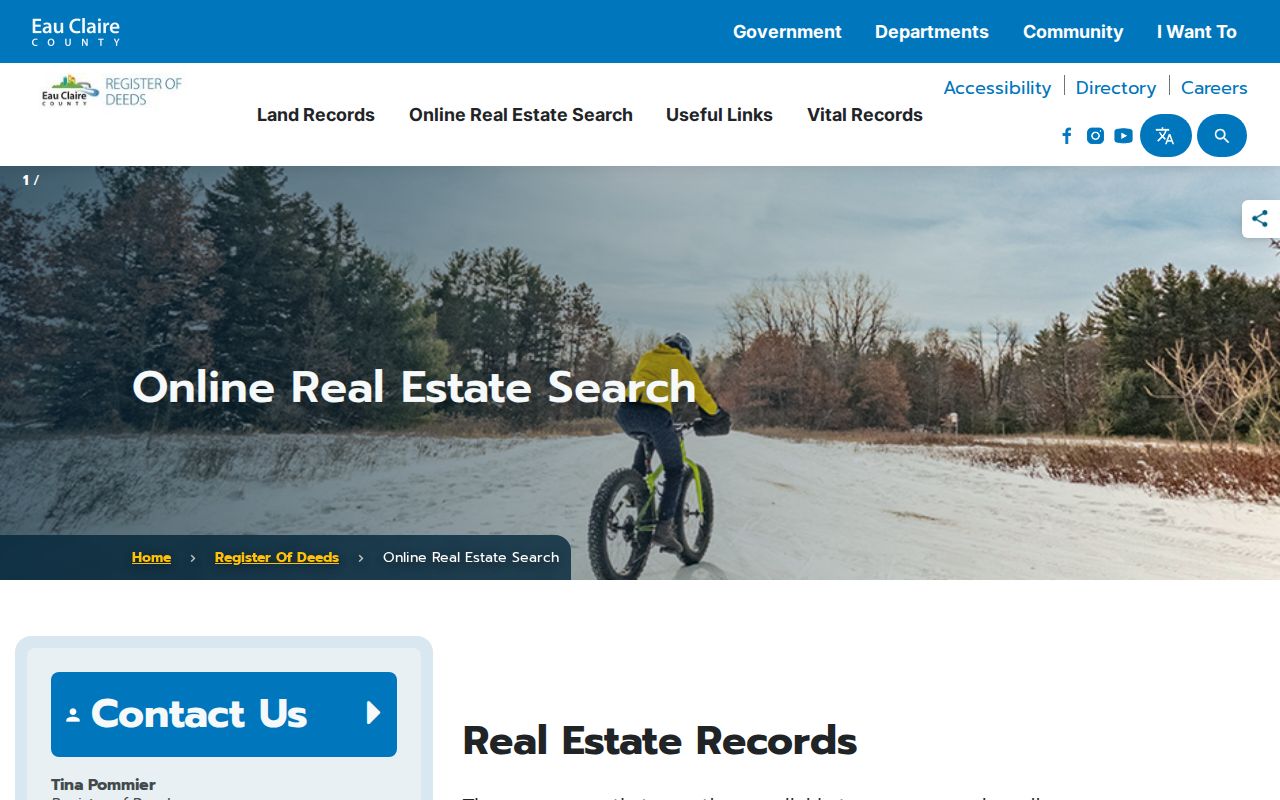
The landing page is only a starting link. Check the live index's current search fields before you enter a name or parcel number into the Eau Claire County deed records system.
Eau Claire County Grantor-Grantee Search
A grantor transfers an interest. A grantee receives it. In a chain search, start with the latest deed into the current grantee, then treat that deed's grantor as the next name to trace. Carry the legal description through every step, because one person's name can attach to more than one parcel. The county index may cite either an instrument number or a book and page reference; the Register of Deeds does not state which style its live search uses.
- Find the newest deed that names the current owner as grantee.
- Read the grantor and legal description from that instrument.
- Search the grantor as an earlier grantee and compare the land description.
- Repeat until a name or date cannot be tied to the same parcel, then ask the office about older books.
- Grantor
- The party conveying the recorded interest.
- Grantee
- The party receiving that interest.
- Chain of title
- The ordered set of transfers tied to one parcel.
- Book and page
- A volume and page reference; confirm the county's live reference format.
- Instrument number
- A document identifier, if the index assigns one.
Eau Claire County Online Deed Cutoff
The online deed index has no firm coverage start. The county gives no image cutover year either. Treat no date as a boundary without confirmation from the Register of Deeds. An index can reach farther back than its image set. A reference may appear while the scanned image stays unavailable. Ask which years are searchable online, and whether an office terminal reaches more.
Eau Claire County was organized in 1856. That fact alone proves little. It does not show the online search reaches the first deed book. It does not confirm that every early volume survived. The identity of the earliest land-record book and any record-loss history remain open questions. Trust better guides than a guessed cutoff for deed records. Staff can help. So can State Historical Society finding aids and a known legal description.
Older Eau Claire County Deed Books
When a digital search stops, try the Register's counter first. The office vault or public terminal is the next fallback. Bring an owner name, parcel number, lot and block, subdivision, and an approximate transfer period. Ask for the matching grantor-grantee index and deed book rather than an open-ended history. The office can confirm whether the needed volume sits in Eau Claire County. It can also say whether another archive holds a usable copy.
Recorded subdivision plats and certified survey maps live with land instruments. A planning office may keep subdivision approvals. The recorded map is the source for the legal lot and block. The Wisconsin Historical Society catalog and FamilySearch catalog may help identify older deed records. Neither lists a confirmed Eau Claire County collection title or year range.
Compare an older deed's description with the plat itself. A parcel can keep its addition or lot label long after street geography changes. The current address alone is not enough.
Eau Claire County Mortgages and Easements
Not every recorded paper conveys land. Eau Claire County deed records sit beside documents that burden or describe a parcel. A mortgage works as a security instrument. An assignment can identify a new holder, and a satisfaction or release records a later discharge. An easement grants or reserves a use right. Restrictions and covenants limit land use. A later release, amendment, or expiration clause can change what an earlier instrument does.
Construction liens may be recorded and then litigated, and condominium or association liens can appear in the same records. The county retention material lists six years for construction liens and seven years from filing for condominium liens, and scanned court records may be destroyed under court retention rules. For a specific claim, inspect the controlling instrument and the case record. Do not assume the online index is complete.
Eau Claire County Probate Deed Transfers
Death changes how land moves. An Eau Claire County probate transfer may appear as a probate order, a personal-representative deed, a beneficiary or transfer-on-death instrument, a survivorship deed, or an affidavit. The estate file shows who held authority to convey. Still, the recorded instrument is the land-record link. WCCA serves as the statewide case index. A full Eau Claire County probate file must be requested from the Clerk of Circuit Court.
The county Register of Deeds records the land instrument itself. To tie an estate name to the parcel, compare the legal description and note the capacity in which the personal representative signed. Vital certificates are separate records. The county Register and Wisconsin DHS can issue local or state certificates, but a certificate never replaces a probate order or a recorded deed.
Request an Eau Claire County Deed
The county offers an online entry point for deed requests. The Register of Deeds publishes no current fee schedule for images, recording, or certified copies. Never send payment based on an old amount or a third-party letter. Call the office at 715-839-4745, or visit 721 Oxford Avenue, Suite 1310 in Eau Claire, Monday through Friday from 8:00 a.m. to 4:30 p.m., to confirm the fee and the exact request format for the document you need.
For an in-person lookup, bring the names, the parcel number, the legal description, and an approximate recording period. For a mail request, ask first what identification fields and payment method the office requires. A plain copy, a certified copy, and an image view can each carry different rules. If the record is not online, ask whether the public terminal, the deed books, or another repository is the next step.
A strong request narrows the search without guessing at a book number. Give the grantor and grantee names as they appear on related records. Include the parcel key, the full legal description, and a date range when one is available. Say whether you need a recorded image, a certified copy, a plat, or an index reference. If the first name search fails, ask the Register whether the index supports an alternate name or instrument reference.
Older chains take patience. Work backward from a known deed and compare each legal description rather than relying on a current street address. The county was organized in 1856. The Register can explain what remains in deed books or vault material and how to use the public terminal. A historical catalog may point toward a collection, but confirm its title and date coverage before assuming it holds a scanned Eau Claire instrument.
Keep the search trail with the parcel. Note the instrument date, the names in grantor and grantee roles, the recording reference, and the lot or section description. A mortgage, easement, plat, or lien may sit beside a deed in the index. None of them shows the same kind of ownership transfer. If a document refers to a separate map or prior instrument, request that reference too. That way the legal description can be followed without guessing which nearby parcel was intended.
Recorded, not guaranteed. The Eau Claire County deed index shows recorded instruments, not every possible interest in land. A title search examines the chain and applicable claims before a reader relies on ownership status.